Do Hard Things
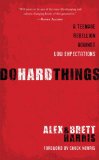
Alex and Brett Harris have a message for their generation:

Most People don’t expect you to understand what we’re going to tell you in this book. And even if you understand, they don’t expect you to care. And eve if you care, they don’t expect you to do anything about it. And even if you do something about it, they don’t expect it to last. We do.
Their powerful message is captured in these words and put succinctly in the title: Do Hard Things. They are spreading the message of “A teenage rebellion against low expectations.” The Harris brothers are challenging and exhorting their generation to rise above the ridiculously low expectations the world has for the average teenager.
This book is filled with real life examples of young people doing hard things and in ways small and large refusing the norms of society and accomplishing great things. Their focus is not just to do things that are hard, but to do worthy things that are hard.
This book is primarily written to teens, but all ages will benefit from this message. Adults also shrink back from right and worthy things because they are hard. I enthusiastically recommend this book.
The Bush-Rove Book Challenge 2009
In his December 26th opinion piece in the Wall Street Journal, Karl Rove writes about a friendly contest with President Bush to see who reads the most books in a year. Rove won in 2006 and 2007. And with only a few days left, his victory looks secure for 2008. President Bush read 95 books in 2006 to Rove’s 110. In the 2007 rematch, the President read 51 and Rove 76. With only five days left in 2008, President Bush once again trailed Rove at 40 books to 64.
The numbers of books read by the two men are impressive. I personally wouldn’t have even been in the game until 2008. However, the total numbers are not the only interesting facts in this contest. Rove lists a number of titles read indicating a broad range of interest including biographies, history, current events, fiction, and some sports. In addition to the books, President Bush read the Bible through each year and a daily devotional.
Rove’s conclusion is also interesting as he lists some of the things he has learned about the President and his love of books. Rove declares, having known George W. Bush for 35 years, that he always has a book close by. He claims the President reads to relax, learn, be engaged, and because of curiosity. Rove saw the President’s willingness in the friendly competition as a way for him to remain focused and accomplish his personal goals.
I shared this article with a good friend and we were stimulated to follow their example. After some discussion, we came up with a plan for us to follow beginning January 1, 2009 and going to December 31, 2009. I have kept a log of the books I read for the last few years. Whenever I finish a book, I record the date, title, author, and category. From this log I know I have averaged about 30 books a year for a while with my upper limit at about 40. But I have not started the year with any stated goals. I have just read what interested me and in areas where I needed to learn and grow. But this is all changing for me in 2009. I know that it will be more productive and profitable to do things on purpose by plan.
With that said, I am recommending everyone take the Bush-Rove Book Challenge 2009 and am ending with a list of recommendations.
- It is a challenge, not a contest. Rove said that President Bush saw it as a good-natured contest to help him remain focused and accomplish his goals. The idea is not to compete against someone just to read as many books as quickly as possible. Speeding through a book in order to put another mark on the wall and “win” is as foolish as it is useless. It accomplishes little more than puffing up our pride. This challenge is rather a way to set a meaningful goal to discipline yourself to read important books, engage them, and learn from them.
- It would be best to do it with a friend. Through collaboration, Bush and Rove learned from each other through discussions, recommendations, etc. Each one also provided some accountability to the other to keep on focus. This is a way to sharpen one another and hold one another accountable. It would probably be best to keep it small. Just two people would keep things more personal and probably more profitable the closer your interests and learning needs are. If you get too many people in, it would be too impersonal and more easily turn into a contest where you are tempted to speed read and run up your score to win.
- Count pages and not just books. Karl Rove said that they eventually began keeping track of number of pages they read as well as total volumes. This may seem obvious because all books are not equal in length, but there is an even more practical reason to do this. When you count pages, it doesn’t matter that much how many books you read. 1,000 pages is 1,000 pages whether it is in one book, two books, or ten books. But practically, when you are counting books, it is easier to subtly prefer the shorter and easier books to the longer and more complex volumes. It is mentally daunting to read one book of 1,000 pages when you could read the same amount and put five or ten on the board. Counting pages is helpful to guard against this tendency and work on some larger more difficult works you know you need to read and you have probably been putting them off.
- Relish the reward. Karl Rove observed that President Bush loved books. It is safe to say that he enjoyed reading them. Reading is its own reward. You will be strengthened, stretched, challenged, sharpened, stimulated probably even relaxed and entertained. But, if you are into rewards and you meet or exceed your goal for the year, you could always buy that nice set of books you have been trying to justify purchasing.
Fasting
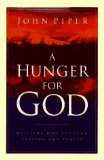
A Hunger for God by John Piper is a study of fasting and desire for God. Piper takes the principles of fasting from the Old Testament and weaves them together with the teaching on fasting in the New Testament. This book answers a lot of questions about the why’s of fasting. He enumerates the blessings of it and sounds many needed warnings also.

I recommend this book to get a better grasp of this subject. The chapter on Isaiah 58 is convicting and clarifying. There are practical implications for all believers. I believe every Christian should find it helpful.
Apologetics and Evangelism


This could be given to a lost friend or coworker without worrying that it would be inaccessible or irrelevant to them. It is not a stand-alone evangelistic book but could probably open a door for further conversation. It could help to break the ice with someone you have been wanting to witness to but can never seem to turn the conversation to weightier matters.
The book deals with many common questions people have in relation to God and the Bible. The answers are not exhaustive but are well done. This helps to keep the book concise and more likely to be read. The style is conversational and interesting. Christians would be benefited by reading it to think about these questions and their answers.





Devotional Commentary
Posted by Jeff Short on December 11, 2008 · Leave a Comment
The Five Books of Moses
The Five Books of Moses by F. B. Meyer is classified as a devotional commentary. Meyer goes chapter by chapter through the first five books of the Bible. Each chapter gets roughly one to one and a half pages in the book.
The comments are not thorough and exhaustive, but they are worthwhile. Meyer touches on the major points in the chapters. In keeping with his usual style, he provides many practical comments.
Reading this book together with the Bible is a good way to use it. If you are reading through the Pentateuch, you could read Meyer’s comments on the chapter you just read and work through the whole that way. I have found this book helpful in this manner.
Share this:
Filed under Reviews, Short Booklog · Tagged with Commentary, Reviews