Preacher Biography


You might call his life a rise and fall. Through his preaching and writing, his popularity grew, but so did his opposition and detractors. When the door of public preaching finally closed to him, he poured all of his energies into his writing. Ironically, his writing is why we know who he was today. He also has more recognition and fame after his death than he did during his life.
Pink was exemplary in his discipline and study. He felt it was his job and that he should go about it as the farmer or banker to their tasks. His long hours and much study did cost him in the terms of fits of illness that sidelined him for periods of time. Once recovered, he would be right back at his work.
The last chapter of his life is a rather dark one. He sought seclusion in Scotland and seems to have had little personal interaction, fellowship, or relationships. His writing in those years is often characterized by a harsh tone and cynicism. This is especially seen in his correspondence of those later years.
This is a new edition of Murray’s biography that is expanded to include new material he did not have when he wrote the first one. It is certainly worth reading. Pink is a model in some ways and a warning in some others. I am thankful though, for I have certainly profited from his writing.
Divine Guidance


Missionary Biography
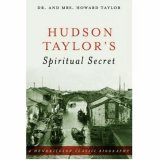

The need he wrote of was the need of the people to have the Gospel, not the financial need of his mission work. In fact, he never asked for money from anyone other than God, and his needs were always met and he operated completely without debt. He did ask for laborers for the field and hundreds responded. It took many years for Taylor to do the work he hoped to do in China, and he was at it right up until his death.
Another interesting fact from this account is that George Mueller was a generous contributor to the China Inland Mission. Yes, the George Mueller that operated the orphanage in England, whose faith is noised abroad. If you know anything of Mueller at all, you know he did not have an abundance of this world’s goods.
I have read the accounts of him waking up in the morning with absolutely no food for him and the children. Surely, he did not have anything to spare. So, what was he doing giving to Taylor’s work while the orphanage was running so lean? He is a testimony to selfless, sacrificial giving. Though he was doing a good work, which had many needs, he did not become absorbed and self-centered in his own work. He still reached out to others in need, remaining Christ-centered. He understood that “God loveth a cheerful giver” (2 Corinthians 9:7). He gave out of his poverty abundantly. He did not worry over this for he had the promise: “And God is able to make all grace abound toward you; that ye, always having all sufficiency in all things, may abound to every good work” (2 Corinthians 9:8).
Statements on the Gospel
I could not count the times that I have been reading a passage that I have read many times before, when the text just grabs me! This happened recently while I was reading Paul’s account of his conversion and calling to preach the gospel in Acts 26. Jesus appeared to him and said, “For I have appeared unto thee for this purpose, to make thee a minister and a witness both of these things which thou hast seen, and of those things in the which I will appear unto thee” (Acts 26:16). Before we move to the primary statement in verse 18, let us consider a couple of things from this verse.
Saul was brought to a confrontation with the Lord of Glory, Whom he previously did not own. Saul was made to bow, submit to the sovereign lordship of Jesus Christ. Note that in exercise of His kingly authority (all authority in heaven and in earth), Jesus makes demands of Saul—“I have appeared unto thee for this purpose.” He says that Saul is not free to do as he pleases, rather is under the yoke of Christ. The message of salvation that Saul received was not a message of a personal escape from trouble and trial. It was not a liberation of the flesh to serve self without guilt. It was a message that meant owning the dominion of the Most High and serving Him fervently with his whole person. Paul would later exhort the Romans to offer themselves as living sacrifices, consecrating their whole selves to God.
Jesus called Saul to be a minister and a witness. He was to preach the gospel, evangelize, do missionary work. The words of Jesus constrained him in this work—“To open their eyes, and to turn them from darkness to light, and from the power of Satan unto God, that they may receive forgiveness of sins, and inheritance among them which are sanctified by faith that is in me” (Acts 26:18). The message he had received was the message he took to the world. He saw his work as to turn men from the darkness of their idolatries, no matter how sophisticated, and reprove them of their false loyalties. He declared to them the true and living God, Creator of heaven and earth, and men must “turn” to Him “that they may receive forgiveness of sins, and inheritance. . .”
This gospel message seems lost to many in our day. Salvation is turned into a personal escape and reward. It is counted among myriad remedies for the various problems of modern man. A gospel of decision and choice is foisted upon eager “seekers”. Modern men have tried a number of things to help them and so they will give religion its fair chance. The result of this is individualistic, selfish lives that do not bow to the lordship of Jesus Christ. A religion that gets them where they want to go.
Solomon said, “Where the word of a king is, there is power” (Ecclesiastes 8:4). The gospel is none other than the word of the King, and not surprisingly, it has power. The word for power in Ecclesiastes 8:4 is a word that means authority or bearing rule. The king has authority and speaks with power. The gospel is the word of the King that speaks with power, authority and He is to be obeyed, reverenced, and served.

The church is the bearer to all the nations a gospel that announces the kingdom, the reign, and the sovereignty of God. It calls men and women to repent of their false loyalty to other powers, to become believers in the one true sovereignty, and so to become corporately a sign, instrument, and foretaste of that sovereignty of the one true and living God over all nature, all nations, and all human lives. It is not meant to call men and women out of the world into a safe religious enclave but to call them out in order to send them back as agents of God’s kingship.
(Leslie Newbigin, Foolishness to the Greeks—The Gospel and Western Culture, p. 124).