Review: Heaven is for Real: A Little Boy’s Astounding Story of His Trip to Heaven and Back

Heaven is for Real: A Little Boy’s Astounding Story of His Trip to Heaven and Back by Todd Burpo
My rating: 0 of 5 stars
Christian publishing is not so different from mainstream publishing in that they are always looking for the next big hit. It is a business after all and if there is no profit, there is no business, just a very expensive hobby. One book seems to be doing very well right now and no one knows how far it will go.
Heaven is for Real by Todd Burpo, Sonja Burpo, Colton Burpo, and Lynn Vincent was released in November 2010 by Thomas Nelson. At the time of this writing, it is listed on Amazon as #2 in books, #2 in Christian living, and #2 in eschatology. This book presents the account of the Burpo’s four-year-old son’s experience during an emergency surgery. He is purported to have passed from consciousness and entered Heaven. He is sent back and after surviving the surgery tells his family the things he has seen, heard, and knows.
Disclosure
Let’s deal with the disclaimers before we proceed. This is not a review of this book nor is it an analysis of its story. I have not read this book and most likely will not read it. One reason for that is that I am just not interested in these types of stories. They come along every so often. Some get into print and others spread by word of mouth.
I am not criticizing anyone else for reading it. I just cannot envision any scenario in which I will read it. This particular book is a conversation starter to address certain issues. My concerns are more general and categorical that this type of book is symptomatic of. Hopefully, that will make sense after I am finished.
The Clamor for Something Else
A certain demographic within American Christianity is always ready for this type of story. As a caveat: American Christianity is not the same as biblical Christianity, but we’ll leave that for another time. These folks are very heavy on experience and always ready to hear of dreams and visions and such.
They love to tell and hear about “what God is doing.” Interestingly, that talk does not include what God is doing in history to fulfill His purpose, nor how He is at work to reconcile to Himself, nor His governance of the universe to unfold according to His plan, nor even how He makes the small drops of water to fulfill His purpose and glorify His name (Job 36:28; Job 37:10-13). No, they are more concerned with what God is doing for them personally: how He is calming their storms, helping them face their giants, enlarging their borders, paying their mortgage, healing their planter’s warts, getting them into the car they want, and generally making them successful.
After a while around such people, you get the feeling their main concern is not for the Word of God, but something else. This sort of story appeals strongly because it is something else. They are not like the Psalmist who loved the law of God, meditated in it day and night, and desired it above earthly treasure (Psalm 119:97; Psalm 119:48; Psalm 119:127; Psalm 19:9-10). In a word, the Scripture is not sufficient for them. They want something else, something more.
I would recommend reading and considering John 6. There a multitude of people were following after Jesus. Though they stood in the presence of the Lord of Glory in human flesh, and though they had already seen mighty signs confirming His witness, they wanted more. They wanted something else (John 6:30-31). Those who majored on experience (John 6:26) were not satisfied with Jesus and wanted something more. When they did not get it, they went away and did not return (John 6:64-66).
A Good Sign
The popularity and success of such stories is a good sign to many. They are gladdened and take it as a sign that faith is alive and well in America. It restores their outlook and justifies great optimism. It is tantamount to an endorsement of what they are all about.
But let us come back to John 6 for a moment. According to Jesus, the clamor for something else did not manifest faith. It actually manifested the exact opposite, unbelief. It is not a heart of faith, love for God, and love for His Word that drives people to buy millions of copies of The Shack, or other categorically similar works. It is unbelief and a desire for something else, anything else, than the truth.
An Evangelistic Tool
Because of the popularity, many people will read these kinds of books who would otherwise neither buy nor read a “Christian” book. Savvy apologists will seize this fact to advance an ends-justifies-the-means argument. In other words, it’s an evangelistic tool and good for reaching where other methods might fail, says they. They reason that people in general are skeptical of religion and if they could hear the testimony of one who went there and could tell them of the experience, maybe they would believe.
Boy, that reminds me of something . . . ah yes, a true after-life experience in Luke 16. A rich man died and went to hell in unbelief. He wanted Lazarus, who died and went to Heaven, to be sent to his brothers to warn them that they would not die like he did (Luke 16:27-28). Abraham told him that they had the Word of God, i.e. Moses and the prophets, to warn them (Luke 16:29). The formerly rich man, who was still unbelieving, responded that that was not sufficient, they needed something else (Luke 16:30). Then Abraham gave him the final word on the matter.
And he said unto him, if they hear not Moses and the prophets, neither will they be persuaded, though one rose from the dead.
~ Luke 16:31
I don’t think these types of books are helpful and I don’t recommend them. If you go away from this post thinking I said anyone who reads this book, The Shack, or other similar books is not a real Christian, you missed the point. What is the point? Hold the Word of God, the Bible, in high regard (Job 23:12) and if you find you prefer something else, you need it all the more.
Lastly, Heaven is real and so is Hell. But don’t take my word for it. Take God’s Word for it.
*This article was originally posted at Short Thoughts on March 14, 2011.
Review: Quiet: The Power of Introverts in a World That Can’t Stop Talking

Quiet: The Power of Introverts in a World That Can’t Stop Talking by Susan Cain
My rating: 3 of 5 stars
Overall good book. I had a few places of disagreement but those areas didn’t interfere with the core value of the book. So, that’s all I will say about that.
If you come to this book waiting on a climactic, silver bullet point, you will be disappointed. That’s not the fault of the book or author. It’s more a function of us washed masses expecting too much from psychology. Generally, psychology is adept at observing what is happening, classifying and categorizing, and identifying similarities and tendencies. Divergence then begins when trying to explain the “why” of what’s happening, whether it’s right or good, and what should or should not be happening? Treatments, therapies, and opinions are a real mixed multitude at that point.
There are two problems with this that we need to careful of. One is turning psychological categories into a born-this-way rationalization for inappropriate or unacceptable behavior. Depraved as we are, we love to have excuses for our actions. “That’s just the way I am,” is not a justification for doing things wrong, unloving, and even harmful. We already rationalize our behavior in our minds and we love to get a second self-helping to harden our consciences even further.
However, identifying personal tendencies can be helpful. Being that we are all sinful, one personality type tends to sin one way, while a different type tends to sin in another way. It also reveals how different types tend to do good.
The second problem is that psychological categories are not an always-reliable predictor of an individual’s behavior. It’s easy to read a book on personality types or temperaments, analyze those around you, and then expect this or that from them. The problem here is that it’s just not that simple. It’s not as simple as determining that you are an introvert or extrovert and so you will always do this or that. There are many more contributing factors and each person really is a unique blend of genetics, environment, past experiences, education, socialization, intellect, talents, personality, emotions, et al. While there may be identifiable similarities and tendencies, there are no completely identical people.
Susan Cain demonstrates this well in this book. She does a good job of using a number of different studies and theories, drawing some of her own conclusions, and illustrating with real-life examples. The number of different studies she refers to gives us an idea of the complexity of the issue. So while we might deal with introversion and extroversion broadly, there are varying degrees of each and other factors that influence behavior.
Early in the book, she describes the western society extrovert ideal and you immediately know what she is talking about. Our society in general idealizes the extrovert, the charismatic personality, the outgoing socializer, the life of the party, etc. We have set this personality up as the most desirable and exert enormous pressure on individuals to measure up. Those who don’t are pushed, shamed, pressured, ridiculed, isolated, and even publicly humiliated. Most of us quiet types know the pain, particularly in childhood, of being told constantly we should be more like Joe and Suzy Social, or that we are shy, backward, antisocial, rude, and sometimes even stupid for being quiet.
The extrovert ideal permeates our society. Business hires and promotions are often decided by it. Elections are often won or lost by it. Education theory is built around it. The influences of the extrovert ideal on education theory is actually quite fascinating. It is another instance where you see it immediately once Cain describes it. It was a Chestertonian moment where Father Brown gets the right answer because he questions the assumptions that everyone is making. I’m afraid far too many of us make the extrovert-ideal assumption.
This brings us to the subtitle and really the main aim of the book. Susan Cain doesn’t hide her own personal tendencies to quietness. Her aim is to show the value and benefits of introversion where everyone assumes it is undesirable and a liability.
She highlights some areas where differences can be problematic, e.g. husband-wife relationships, and parent-child relationships. It really can be challenging when one spouse is introverted and the other extroverted, or where parents may be extroverted and their child introverted. This book can be helpful to both sides in understanding one another and possibly alleviating some fears or conflicts.
I do recommend this book as helpful in all different kinds of relationships where one type of person is relating to another type. It can be helpful in understanding and loving different people in your life. I do want to caution you along the line of the two problems I mentioned earlier. Let me explain this caution in the framework of the husband-wife relationship.
The Bible clearly commands us to love our spouse. I love the way Paul speaks of marriage in 1 Corinthians 7. He writes for every man to have his own wife and every woman to have her own husband. Having your own wife or your own husband means you are also commanded to love your own wife or your own husband. You are commanded to love your own spouse, not the statistical average spouse, not the ideal spouse, but your own flesh-and-blood spouse. You must love the one you married.
The two problems mentioned above can wreak havoc in this relationship. On the one hand, you can rationalize “the way you are” as an excuse for being unloving to your spouse in some particular way. On the other hand, you can place unreasonable demands and expectations on your spouse because they are this way or that way. Generalizing I am, but I hope you get the point.
Review: David and Goliath: Underdogs, Misfits, and the Art of Battling Giants
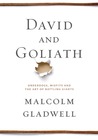
David and Goliath: Underdogs, Misfits, and the Art of Battling Giants by Malcolm Gladwell
My rating: 4 of 5 stars
Excellent read. Gladwell has carved a niche out of challenging conventional assumptions. His basic premise is that the perceived weaknesses of the underdogs is often their greatest strengths. His case is compelling.
As expected, Gladwell makes his case from history and scientific studies. He mines history for some rare hidden gems. I always learn some facts and esoteric details from the stories he uses. I also appreciate the way he uses the data from studies. Data in and of itself is meaningless. It’s just a bunch of numbers. Data has to be interpreted to be meaningful.
I will caution you that there is some offensive language in this book. It is not a lot and this is a case where it’s contextually accurate and warranted. We should be offended by what was said. We tend to romanticize the past over time, but we shouldn’t lose touch with the reality.
I recommend this book. It is informative and personally edifying. It is the perfect type of book to give your mind a break from work, or some other reading you have been doing. I don’t mean it is a light and fluffy read. I don’t read a lot in this genre and I find it intellectually refreshing and stimulating to give the mind some variation from time to time.
Review: Amazing Grace: William Wilberforce and the Heroic Campaign to End Slavery
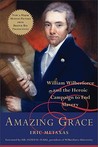
Amazing Grace: William Wilberforce and the Heroic Campaign to End Slavery by Eric Metaxas
My rating: 5 of 5 stars
Excellent book. Things slowed up a bit toward the end, as life usually does, but I mostly did not want to put it down. Aside from being a well-written, well-researched book, this is an important book. Wilberforce’s life deserves to be more widely known. I came into the book knowing that he was key in the fight for the abolition of the slave trade in England in the early nineteenth century, but that was about all. I am thankful to know better now.
His life has many lessons for us–faith, perseverance, service, charity, etc. Wilberforce had begun a promising political career when he was converted to Christianity. He then faced a crossroads crisis. He did finally decide to remain in politics, but to do so with a Christian worldview, not divorcing his faith from the public square. His faith informed and drove his public service. He was resolved to pursue two great objects with his life–abolition of the slave trade and the reformation of manners (by which he meant the morality of the nation). His was a life lived to a great purpose.
Wilberforce was pre-Victorian, and you might also say he helped make Victorian England possible. We tend to romanticize these periods of British history. Metaxas gives us a good look at the reality that was not so idyllic. The time was full of excesses, cruelties, injustices, and wickedness. Wilberforce engaged his generation and challenged them. We have many parallels today. Human trafficking is by no means gone, but we presuppose it wrong. Cruelties and injustice still abound. How shall we then live?
Metaxas has quite a bit of personality, but he mostly stayed out of the way that we might see Wilberforce the more clearly. I appreciated that effort. I highly recommend this book.
Review: How to Tell a Story and Other Essays

How to Tell a Story and Other Essays by Mark Twain
My rating: 4 of 5 stars
Good but short. I enjoyed the distinction between a comic and a humorous story. The humorous story is where the art and craft are. Twain illustrates well. We just needed more of it. Good to read if you’re a fan of Twain or a storyteller.